In person incubator
Run as a week-long intensive, in person. Each day covers theory and practice sessions, with group discussions and collaborative exercises. Best for building strong cohort bonds.
A guide for facilitators running programs for founders of financially Non-Extractive Organizations — businesses that prioritize purpose, community, and sustainability over hyper-growth.
This playbook is meant to help facilitators run their own Post Growth Entrepreneurship (PGE) Incubator, for founders of financially Non-Extractive Organizations.
This PGE Incubator playbook is set out as follows: in Part I there are practical guides for the facilitator. Part II details the content to be covered in the incubation sessions, in a suggested chronological order, with links to video examples of this content. Part III gives suggested activities that correspond to the content in Part II, and includes video examples of the exercises for the facilitator. Slides that can be used for both Part II and Part III are found in the appendix.
Different cohorts need different pacing. These cards summarize the main delivery formats so facilitators can choose what best fits their participants.
Run as a week-long intensive, in person. Each day covers theory and practice sessions, with group discussions and collaborative exercises. Best for building strong cohort bonds.
Fully remote. Theory and practice are covered in the same weekly session. After covering a concept, participants immediately do the corresponding activity together online.
Remote, but theory and practice are separated into distinct sessions. Participants watch theory videos or attend webinars, then join a separate practical workshop to do the exercises.
One-on-one peer feedback is a core component of the incubator — participants are paired or grouped to review each other's work throughout the program. Refer to the full group formation guidelines for detailed instructions:
learning circles — group formation guidelinesMentors can be experienced entrepreneurs, subject matter experts, past program participants, or the facilitator themselves. They provide personalised, one-on-one guidance and tailored advice to participants. We recommend scheduling at least one structured mentor check-in per participant during the program.
Start the incubator by welcoming everyone. State the session goals and introduce the facilitators (and mentors, if they are present). Ensure that participants have a clear understanding of what the incubator will cover and what is expected of them throughout the program.
The PGE Incubator is a community of entrepreneurs proving that not only is there an alternative to the dominant paradigm of hyper-growth at all costs, but that this alternative can be advantageous.
Our focus is on financially Non-Extractive Organizations — businesses that are financially sustainable while also being socially and environmentally responsible. The incubator helps participants articulate their unique competitive advantages and reframe their relationship with growth.
There are many examples of businesses that have succeeded without hyper-growth: companies that stayed small and local; cooperatives; social enterprises that grew at a slow and controlled pace. These are the kinds of businesses we celebrate and support.
Fair labor practices; environmental sustainability; building in deep collaboration with the community. These are not just values — they are strategic advantages that attract loyal customers, motivated employees, and long-term resilience.
Frame growth as one factor among many — not the primary objective. Discuss what meaningful growth looks like, the dangers of reckless growth, and the concrete alternatives to growth-at-all-costs thinking.
Based on Julia Cameron's book The Artist's Way, we borrow two creative practices and apply them to entrepreneurship. These are tools for unblocking creativity, building self-awareness, and sustaining the mental energy required to run a business:
Write 3 pages of stream-of-consciousness text each morning. Clears mental clutter, unearths ideas and concerns. A helpful daily exercise to process learning and self-coach through challenges.
Take yourself somewhere fun and inspiring once a week, alone — a museum, a new park, anywhere. Replenishes creativity and prevents burnout.
For additional personal growth and PGE theory reading:
Reading listThe Business Model Canvas (BMC) is a one-page overview of a business model. The PGE Incubator uses a Sustainable Business Model Canvas which adds eco-social costs and benefits.
Patagonia Example:
Use Patagonia as a discussion example: "What makes Patagonia's model sustainable?" "How does considering eco-social benefits change strategy?"
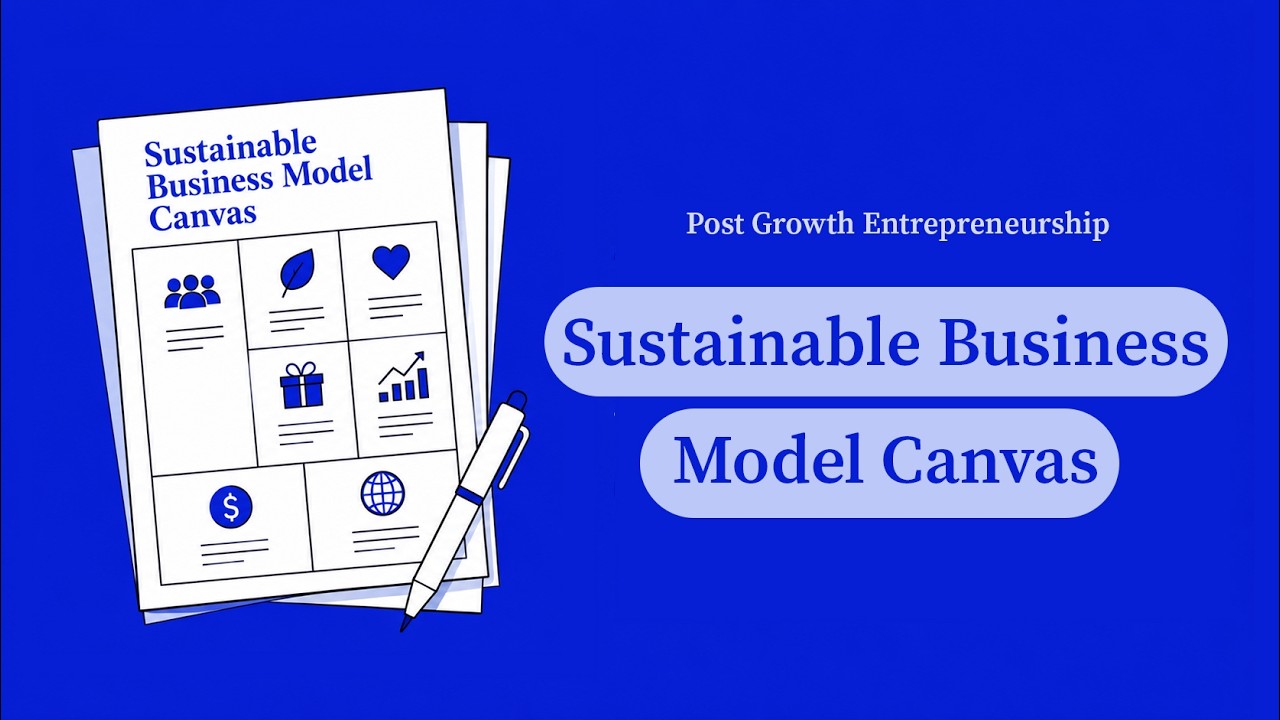
Explained by Chiara YouTube
Mom testing is an important component of finding your product-market fit. This section is based on the book The Mom Test by Rob Fitzpatrick.
The key idea: when you have an idea for a product or business, you need to talk to customers to validate it — but you have to do it the right way. If you ask people (like your mom) "Do you think this is a good idea?" they will often say yes just to be nice. That doesn't give you real, useful feedback. Instead, ask about their real experiences, problems, and behaviours.
Explained by Melanie YouTube
To build something impactful, we must start small and concrete. The Lean Startup methodology — from Eric Ries's book of the same name — is about testing your assumptions quickly and efficiently to learn what actually works.
The goal is to build the smallest thing you can (a Minimum Viable Product, or MVP) to start a real feedback loop with customers or users. Don't wait until the product is perfect — get it in front of people as early as possible.
The Challenge: Ask participants to think of the smallest and fastest MVP they can produce. Remind them that failure is informative.
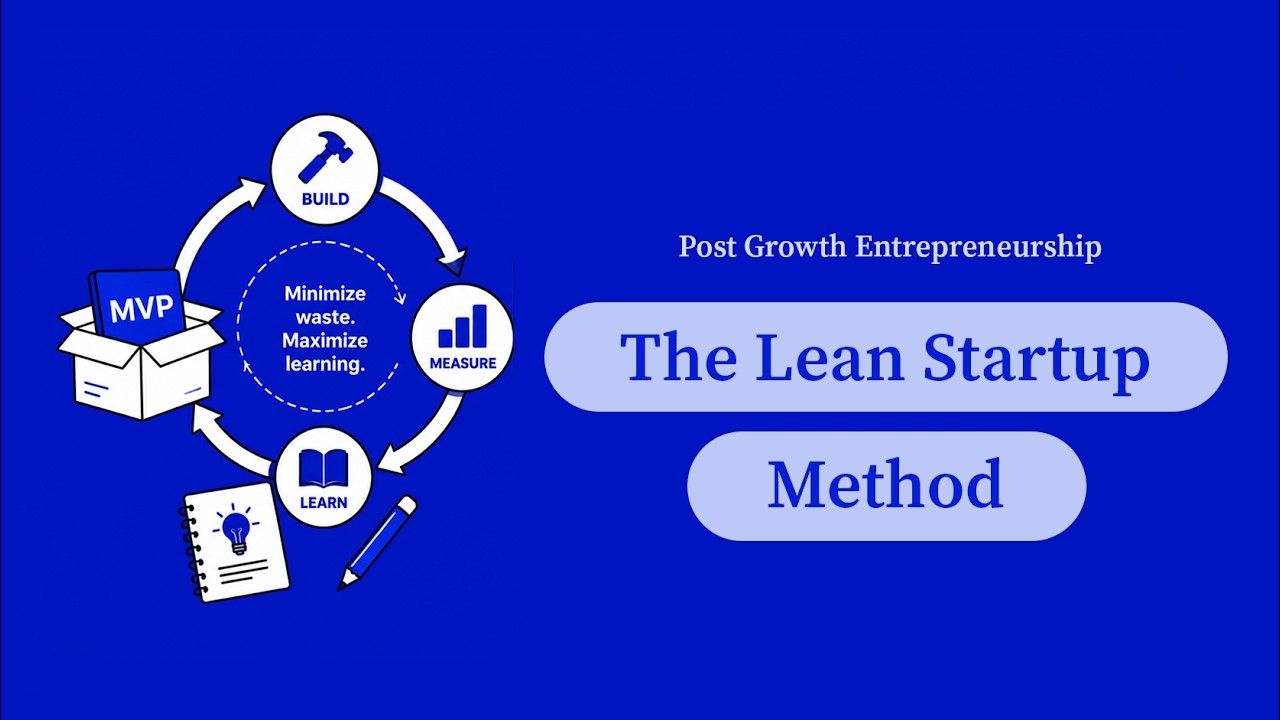
Explained by RiccardoYouTube
Bootstrapping means building and growing your startup using the resources you have at hand, without significant outside investment.
Bootstrapping doesn't mean doing everything alone — it means being creative, resourceful, and cost-effective. It also fits naturally with the PGE ethos: rather than taking on investment that comes with growth expectations attached, you retain control and can build on your own terms.
Offer a consultancy or manual service related to your product idea. Use the service phase to understand customer needs and finance initial development. Gradually transition as the product becomes viable.
Explained by MelanieYouTube
Preparing for Demo Day. Each participant should construct a pitch answering:
The goal: participants explain their business and MVP to a wide audience and ask for help/tips/contacts.
Previous Demo Day examples from nonprofit.ventures:
NPV Cohort Page NPV Demo DayFull group activities. Useful for review, check-ins, check-outs. "Popcorn style" — no forced ordering.
Small groups giving each other feedback.
Completed alone, as homework or during sessions.
2 minutes per person, popcorn style. Each cohort member answers:
Two practices to try throughout the program:
Morning Pages: Write 3 pages of stream-of-consciousness text each morning.
Artist's Date: Take yourself somewhere fun and inspiring once a week, alone.
Resources for the Facilitator
SBMC Guide Miro board example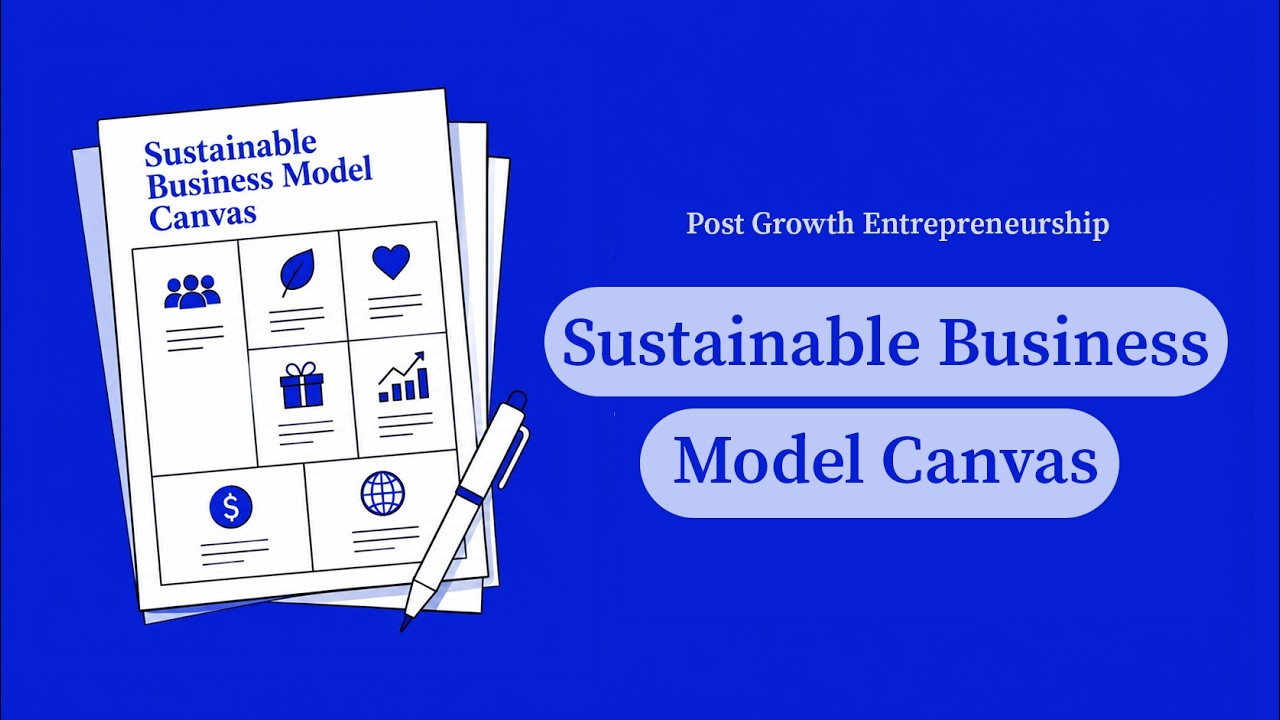
Explained by SivaYouTube
Discuss customer interview experiences:
Explained by Lionel Google Drive Video
Remote Mom Testing
It's also possible to conduct Mom tests remotely. Rob Fitzpatrick has an updated series of videos on remote customer development:
Remote Mom Test Series (Youtube)Open Q&A on Lean Startup and MVP. Key question for the group: "What's the smallest thing I can build to test my idea?"
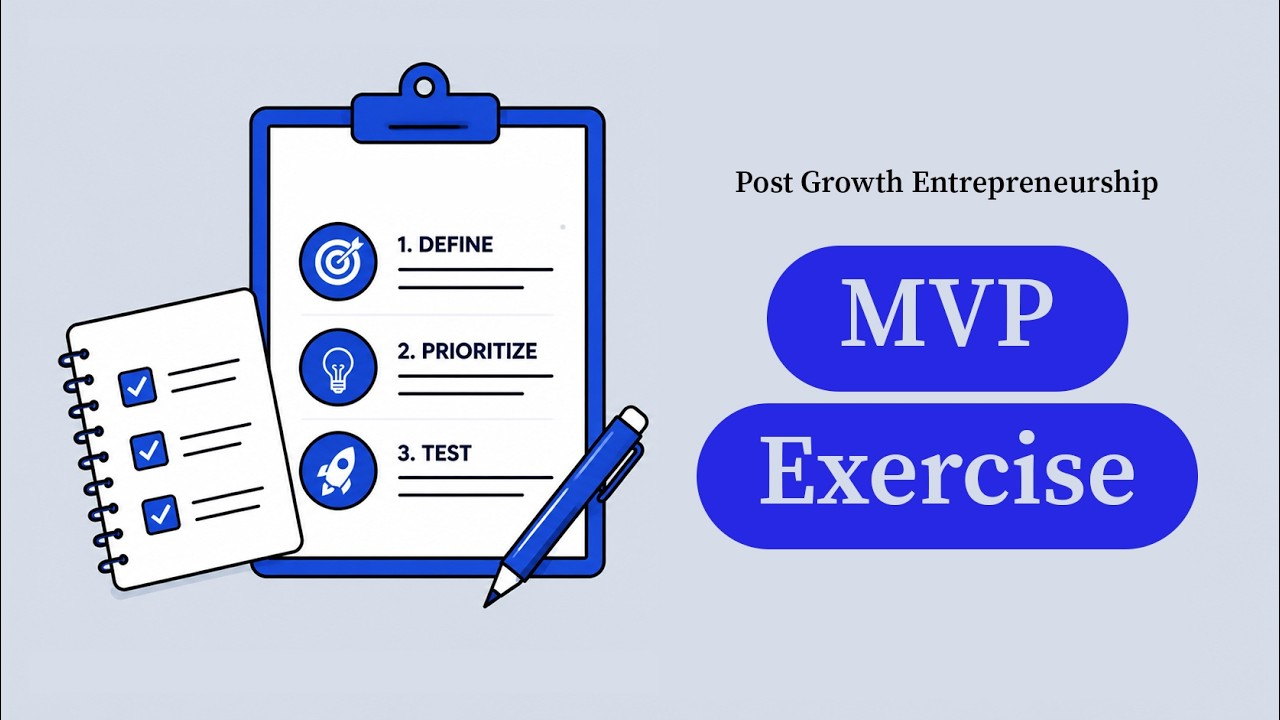
Fill in the MVP Experiment Canvas.
Fill MVP CanvasShare MVP progress:
Many participants will get stuck. Encourage troubleshooting with each other. Participants often know potential customers for each other. Always encourage going smaller with the MVP.
Explained by RichardYouTube
Step 1: Person A gives a 5-min pitch (like Demo Day). Person B gives 3-min feedback. Swap.
Step 2: Person A gives a 60-sec elevator pitch. Person B gives 2-min feedback. Swap.
Both pitches must have a clear ask at the end.
Practice asking the audience for something ahead of Demo Day.
Slide decks are available for both the theory sessions (Part II) and the incubator exercises (Part III). These can be used as-is or adapted for your cohort.
Theory Slides (Part II) Incubator Slides (Part III)All video examples used throughout the playbook are available in the shared Google Drive folder. Additional reference videos from past incubators are listed below.
All videos - Google drive folder
Explained by MelanieYouTube
Explained by MelanieYouTube
Examples of previous Demo Days and participant cohorts from nonprofit.ventures:
NPV Cohort page NPV Demo Day Archive